The Best Incense for Meditation and a Calm Space
For meditation, choose natural, low-smoke incense in grounding scents: sandalwood and Tibetan rope/stick incense for focus, Nag Champa for the classic calming note, palo santo and sage for clearing a space. Always burn on a proper holder, away from drafts.
Scent is a powerful anchor. A familiar incense burned at the start of each sitting quickly becomes a cue that tells your mind it's time to settle — which is exactly what you want from a meditation ritual. Below are ten incenses and botanicals worth burning, from grounding sandalwood and traditional Tibetan rope incense to gentle low-smoke options, plus how to burn them safely and cleanly. Most cost just a few dollars a pack, so it's easy to try several and find your scent.
How we picked: we favored natural, botanical incense over synthetic-fragrance sticks, chose grounding and calming scents suited to meditation rather than perfumey ones, and flagged low-smoke and smoke-free alternatives for anyone sensitive to smoke.
Grounding scents for focus
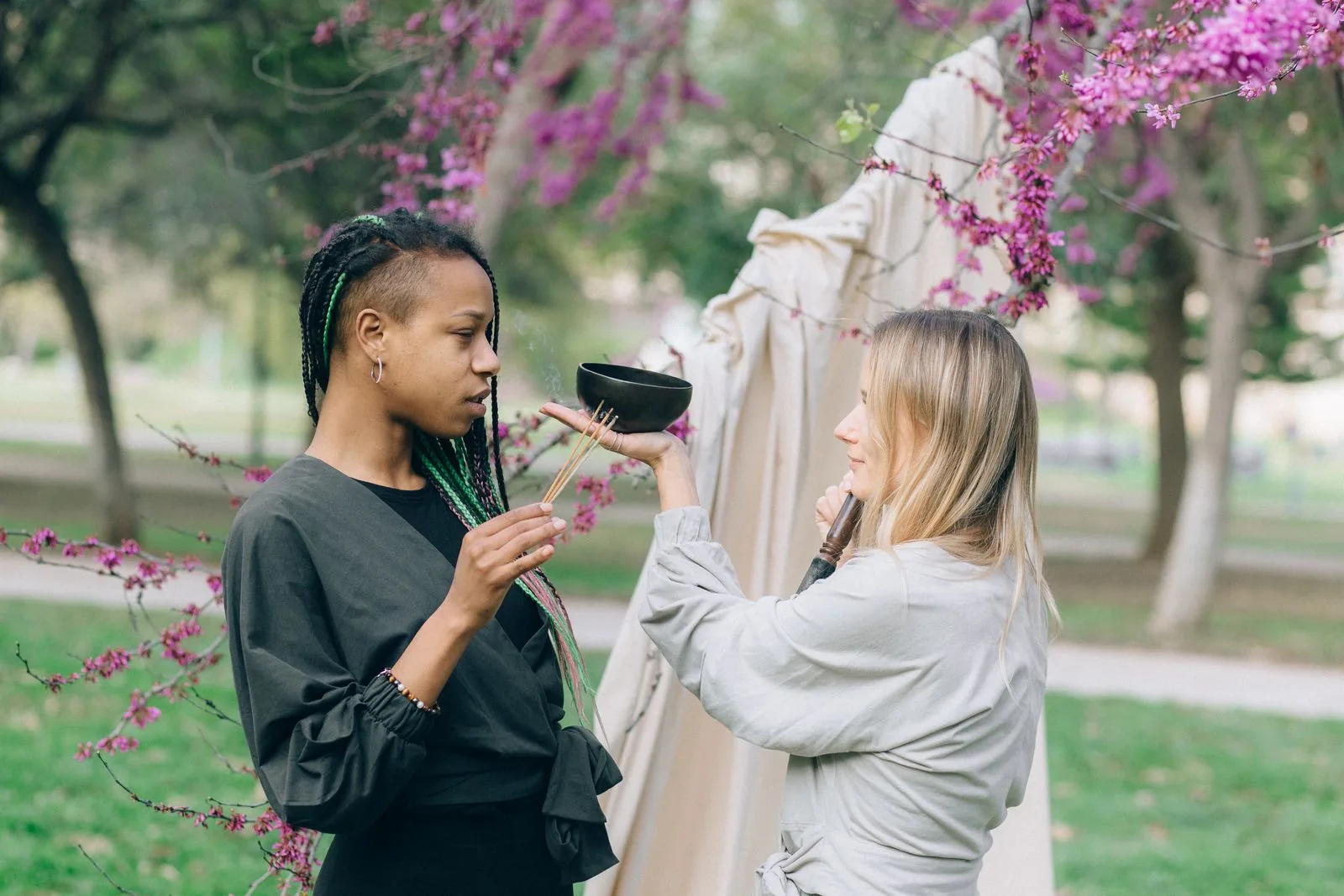
Warm, woody and resinous scents help the mind settle without becoming distracting.
Sandalwood incense
sandalwood incense sticks — the warm, woody, grounding classic — the scent most associated with meditation itself. Best for daily practice. Pro: focusing without being sweet or heavy. Con: real sandalwood costs more than fragrance-oil imitations. Around $8–$20 a pack.
Tibetan incense
Tibetan incense sticks — herbal, smoky sticks made to traditional monastery recipes from ground herbs rather than a bamboo core. Best for an authentic, earthy note. Pro: complex, natural and low in perfume. Con: the herbal smokiness isn't for everyone. About $10–$22.
Frankincense and myrrh
frankincense and myrrh incense — deep, resinous tree-resin scents used in sacred ritual for millennia. Best for a solemn, contemplative mood. Pro: rich and genuinely calming. Con: heavier than woods; a little goes far. Around $8–$18.
Cedarwood incense
cedar incense sticks — dry, clean forest-wood scent that grounds without sweetness. Best for a fresh, focusing burn. Pro: crisp and unobtrusive. Con: subtler than sandalwood, so it fades faster in a big room. About $7–$16.
Calming and space-clearing scents
For unwinding, and for freshening a room before you sit, reach for these.
Nag Champa
Nag Champa incense — the iconic sweet, floral-woody blend built around champa flower and sandalwood — the scent of yoga studios everywhere. Best for a warm, familiar calming note. Pro: beloved, long-lasting and inexpensive. Con: stronger and sweeter than pure woods. Around $6–$15.
Palo santo
palo santo sticks — bright, citrusy "holy wood" from South America, burned to clear and freshen a space. Best before practice or to reset a room. Pro: uplifting scent and a little smoke goes a long way. Con: buy only sustainably harvested sticks. About $10–$20.
White sage smudge
white sage smudge sticks — bundled dried sage traditionally burned to cleanse a space. Best for an occasional reset rather than daily use. Pro: strong, herbaceous and long-used. Con: smoky, and best sourced ethically given cultural and sustainability concerns. Around $8–$18.
Lavender incense
lavender incense sticks — soft, floral and soothing, the classic wind-down scent. Best for evening practice and bedrooms. Pro: gentle and relaxing. Con: can read sweet or soapy in cheap versions. About $6–$14.
Low-smoke Japanese incense
low smoke japanese incense — fine, cored-less sticks in the Japanese tradition that give scent with minimal smoke. Best for anyone sensitive to smoke or in a small space. Pro: refined scent, far less smoke and soot. Con: pricier per stick and shorter burning. Around $12–$28.
Incense cones sampler
incense cones sampler — a mixed pack of cones so you can try several scents cheaply, plus they burn downward for a concentrated release. Best for finding your scent. Pro: variety at low cost. Con: cones burn hotter and need a heatproof dish. About $8–$16.
How to choose your incense
Match the scent to the moment. Grounding woods and resins (sandalwood, cedar, frankincense, Tibetan herbal) keep the mind focused during a sitting; calming florals (lavender, Nag Champa) suit evening and wind-down; clearing botanicals (palo santo, sage) are for freshening a space before you begin rather than burning throughout. Prefer natural, botanical incense over cheap synthetic-fragrance sticks — it smells cleaner and produces less harsh smoke. And if smoke is an issue at all, start with low-smoke Japanese incense.
Sticks, cones, coils and rope: which format?
Incense comes in several forms and they behave differently. Sticks are the everyday choice — a bamboo core dipped in scent, or in the Tibetan and Japanese traditions a solid extruded stick with no core, which burns cleaner. A standard stick burns for roughly 30 to 60 minutes, plenty for a sitting. Cones burn faster and hotter, releasing a more concentrated puff of scent in about 15–25 minutes — good for quickly scenting a room, but they need a heatproof dish. Coils burn slowly for hours and suit larger spaces. Tibetan rope incense is rolled herbs in paper, knotted and burned for an earthy, traditional scent.
For meditation, cored-less sticks and low-smoke Japanese sticks give the cleanest burn; start there if you're sensitive to smoke. You rarely need more than one stick or cone at a time — incense is meant to be a subtle cue, not to fill the room.
Storing incense so it keeps its scent
Incense fades if you leave it open to the air. Keep sticks and cones in a sealed bag, tin or box, away from heat and direct sunlight, and they'll hold their fragrance for a year or more. Store different scents separately, since strong ones like Nag Champa and patchouli will bleed into milder woods over time. Somewhere cool and dry — not a hot windowsill or a damp bathroom — is ideal. Natural, botanical incense generally keeps its true scent longer than cheap synthetic-fragrance sticks, another reason to buy the better stuff.
Burning incense safely and with less smoke
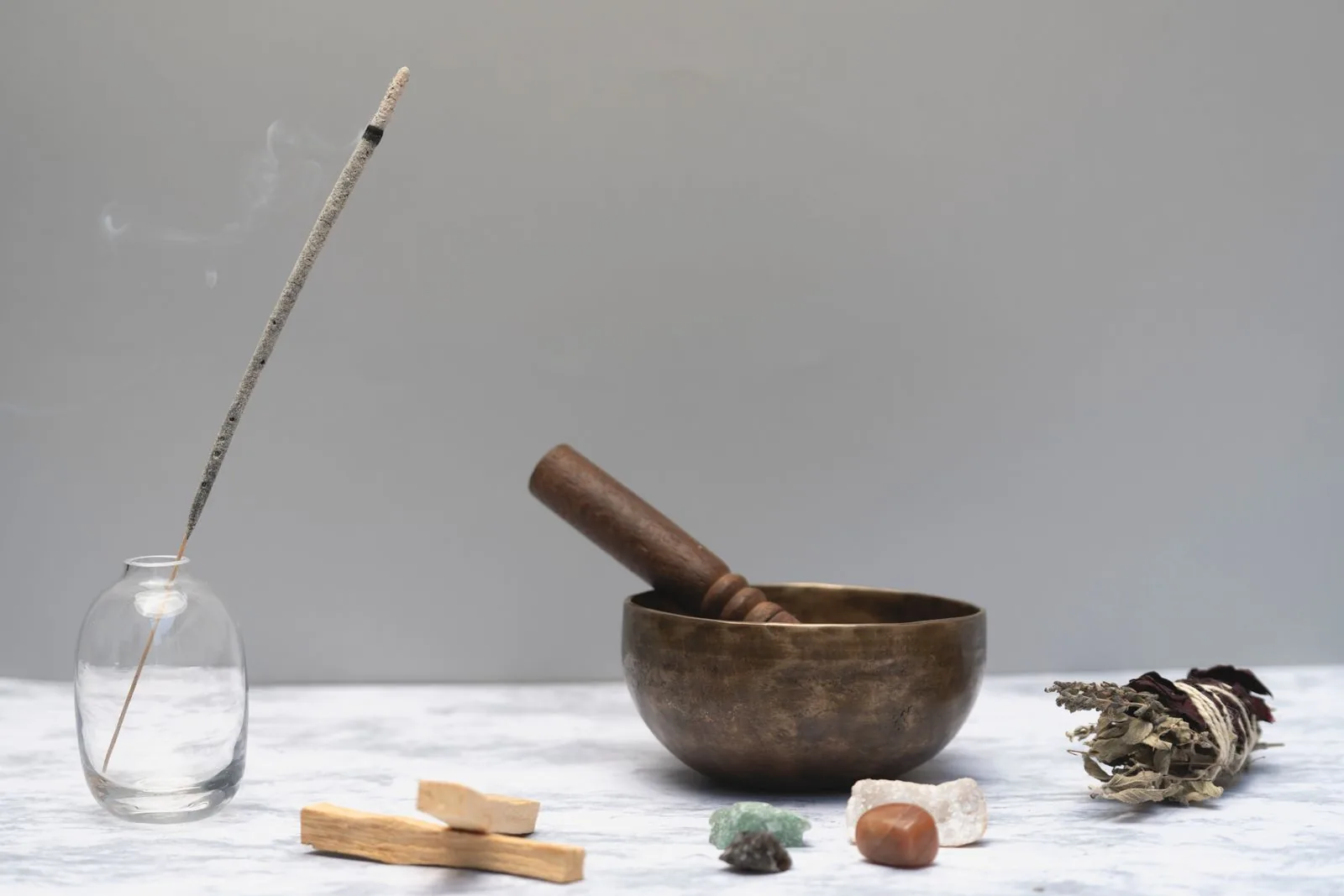
Always use a proper incense holder or ash catcher, place it on a heatproof surface well away from curtains, paper and drafts, and never leave it burning unattended. Let the ash fall into the catcher and make sure the stick is fully out afterward. To reduce smoke, choose low-smoke or Japanese-style incense, burn a shorter stick or snap one in half, and keep the room ventilated. Prefer no smoke at all? An essential-oil diffuser or a scented candle gives you the same scent cue without it. Complete your corner with a singing bowl, a cushion and a strand of mala beads.